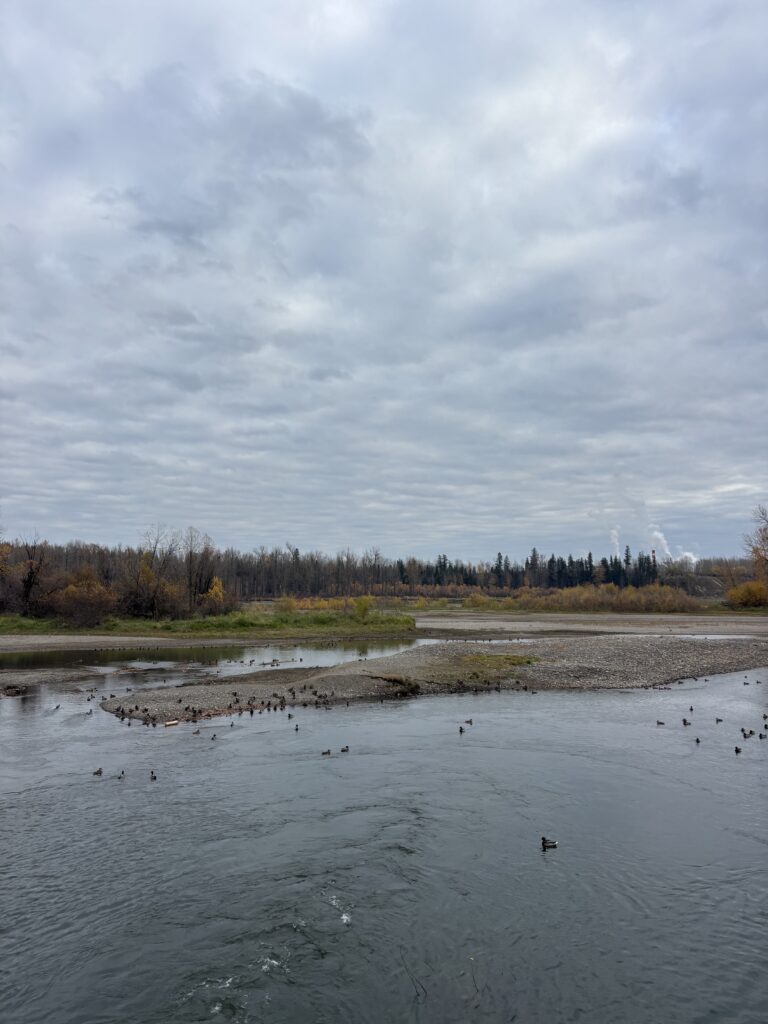
Today in class, we had the opportunity to visit Cottonwood Island Park, where we discussed colonialism, what it means to be colonizers and how colonization has impacted indigenous people. We also created our own lesson plans based on the park and explored how we could incorporate outdoor learning into the species curriculum.
I really enjoyed this experience because instead of sitting in a classroom and being told to create a lesson plan about Cottonwood Island Park, we actually got to go there, walk around, and explore the different learning opportunities. I think being physically present in the environment made it much easier to come up with creative and meaningful lesson ideas. We could see firsthand what the park had to offer and think about how we could use different areas to engage students in their learning.
One thing I have noticed throughout this course is how much I enjoy learning outdoors. I have always loved being outdoors, and I find that when we have class outdoors, I am much more engaged and focused. I feel like I can listen better, participate more, and really take in what I’m learning. I also find myself less distracted than when I’m sitting in class. Sometimes, just getting outside and changing scenery feels like a breath of fresh air. Because I notice it so much, I think it’s important to give my future students the opportunity to learn outside the four walls of my classroom. Especially for younger students, being outdoors lets them move around, explore, ask questions, and learn through hands-on experiences. Not every student learns best by sitting at a desk, and I think outdoor learning is a great way to support different learning styles and needs.
One takeaway from this experience is that outdoor learning can fit into many subjects and grade levels. For example, students could explore plants and ecosystems in science, use natural materials for counting and patterns in math, or write descriptive paragraphs about their surroundings in language arts. Social studies could also be incorporated by learning about the land’s history and the Indigenous peoples connected to it.
Overall, this experience reminded me that, as a future educator, learning doesn’t always have to happen inside the classroom. I want to create opportunities for my students to explore different environments, connect with the land, and learn outside the classroom. I think outdoor learning can make lessons so much more engaging and memorable for students.